Iconographic Details of the “Unfading Rose”
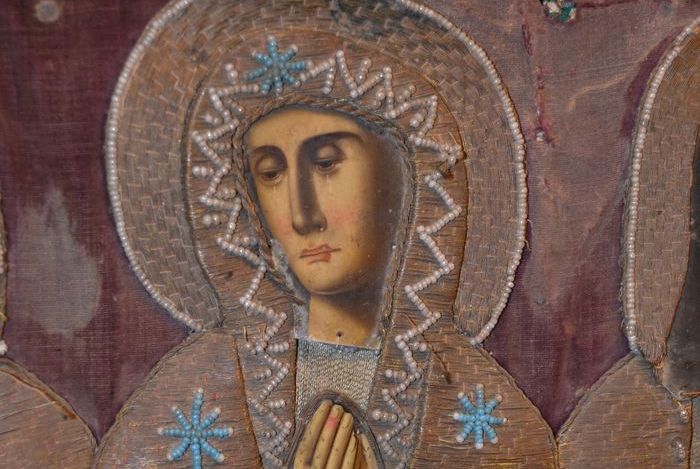
The icon of the Virgin Mary as the “Unfading Rose” is richly symbolic and visually elaborate. Both Mary and Christ are shown wearing jeweled...
Iconographic Details of the “Unfading Rose”
The icon of the Virgin Mary as the “Unfading Rose” is richly symbolic and visually elaborate. Both Mary and Christ are shown wearing jeweled...
The Iconography of “The Unfading Rose”
The icon of the Virgin Mary known as “The Unfading Rose” became widely popular in the eighteenth century. Scholars such as A. Sukrow, Thalia...
The Iconography of “The Unfading Rose”
The icon of the Virgin Mary known as “The Unfading Rose” became widely popular in the eighteenth century. Scholars such as A. Sukrow, Thalia...
Case Studies in Post-Byzantine Iconography
In Anatolia, many post-Byzantine icons show clear references to traditional Byzantine painting. At the same time, they reflect wider artistic trends of the time...
Case Studies in Post-Byzantine Iconography
In Anatolia, many post-Byzantine icons show clear references to traditional Byzantine painting. At the same time, they reflect wider artistic trends of the time...
The Enigma of the Capitol of Constantinople
This article explores the mystery surrounding the Capitol of Constantinople, a monument that symbolized Roman identity and played an important role in the city’s...

Decorative Motifs on Capitals
Some capitals found in Constantinople’s cisterns are decorated with simple but meaningful motifs. These include vine leaves, crosses, or medallions placed within framed moldings....
Corinthian Capitals in Constantinople’s Cisterns
Corinthian capitals are an important architectural feature found in nineteen different cisterns in Constantinople. These capitals show many changes over time, evolving from the...